
Coffee
Fully Washed Coffee vs Honey Process Coffee: What’s the Difference?
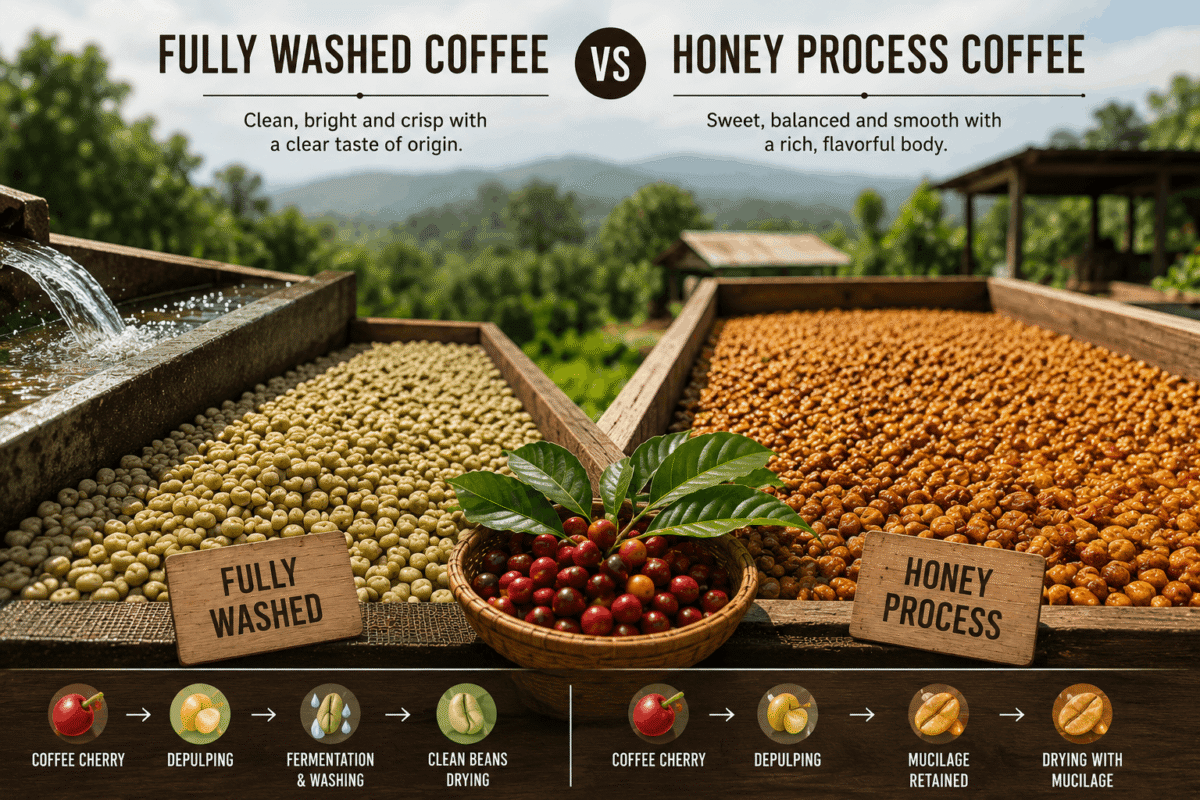
Coffee lovers often focus on roast levels, brewing methods, and coffee origins. However, one of the most important factors influencing a coffee’s flavor is something many people overlook—the processing method.
Two popular coffee processing methods are Fully Washed Coffee and Honey Process Coffee.
Although both start with the same coffee cherries, the way they are processed after harvesting can dramatically affect their taste, aroma, sweetness, body, and overall drinking experience.
Let’s explore the differences.
What Is Coffee Processing?
Coffee processing refers to the steps used to remove the outer layers of a coffee cherry and prepare the bean for drying and roasting.
A coffee cherry consists of:
- Outer skin
- Fruit pulp
- Sticky mucilage layer
- Parchment layer
- Coffee bean
The amount of fruit material left on the bean during drying plays a major role in determining the final flavor of the coffee.
What Is Fully Washed Coffee?
The Fully Washed Process, also known as the Wet Process, is one of the most widely used coffee processing methods worldwide.
How Fully Washed Coffee Is Made
- Coffee cherries are harvested.
- The outer skin and pulp are removed using a pulping machine.
- The beans are placed in fermentation tanks.
- Natural enzymes break down the sticky mucilage.
- The beans are thoroughly washed with water.
- The cleaned beans are dried to the desired moisture level.
Characteristics of Fully Washed Coffee
Fully washed coffees are known for:
- Clean flavor profile
- Bright acidity
- Crisp finish
- Clear origin characteristics
- Consistent cup quality
Because most fruit material is removed before drying, the coffee bean’s natural characteristics become more pronounced.
What Is Honey Process Coffee?
Despite its name, Honey Process Coffee does not contain honey.
The name comes from the sticky, honey-like mucilage layer that remains attached to the coffee bean during drying.
How Honey Process Coffee Is Made
- Coffee cherries are harvested.
- The outer skin is removed.
- A portion of the mucilage is intentionally left on the bean.
- The beans are dried with the remaining fruit sugars attached.
- Once drying is complete, the beans are processed and prepared for roasting.
Unlike fully washed coffee, the mucilage is not completely removed before drying.
Characteristics of Honey Process Coffee
Honey-processed coffees are often known for:
- Increased sweetness
- Rich body
- Fruity flavors
- Balanced acidity
- Smooth mouthfeel
The remaining fruit sugars contribute additional complexity during the drying process.
Fully Washed vs Honey Process Coffee
| Feature | Fully Washed Coffee | Honey Process Coffee |
|---|---|---|
| Water Usage | High | Lower |
| Mucilage Removed | Completely | Partially retained |
| Flavor Profile | Clean and bright | Sweet and complex |
| Acidity | Higher | Moderate |
| Body | Light to medium | Medium to full |
| Sweetness | Moderate | Higher |
| Fruity Notes | Subtle | More pronounced |
How Does Processing Affect Taste?
Imagine two identical coffee cherries grown on the same farm.
If one is processed using the washed method and the other using the honey process, the resulting cups can taste surprisingly different.
Fully Washed Coffee Often Offers:
- Citrus notes
- Floral aromas
- Bright acidity
- Tea-like clarity
- Clean finish
Honey Process Coffee Often Offers:
- Caramel sweetness
- Honey-like notes
- Stone fruit flavors
- Chocolate undertones
- Fuller body
This demonstrates how processing can influence flavor just as much as the coffee variety itself.
Why Do Farmers Use Different Processing Methods?
Different processing methods allow coffee producers to create unique flavor profiles and add value to their coffee.
Benefits of Fully Washed Processing
- Consistent quality
- Cleaner flavor
- Easier flavor evaluation
- Popular in specialty coffee markets
Benefits of Honey Processing
- Reduced water usage
- Enhanced sweetness
- Unique flavor characteristics
- Greater product differentiation
Many specialty coffee farms produce both styles to cater to different customer preferences.
Which Coffee Is Better?
There is no universal winner.
Choose Fully Washed Coffee if you enjoy:
- Bright and clean coffee
- Distinct origin flavors
- Crisp acidity
- Specialty filter coffee
Choose Honey Process Coffee if you enjoy:
- Sweet coffee
- Rich mouthfeel
- Fruity flavors
- Lower perceived acidity
Ultimately, the best coffee is the one that matches your personal taste preferences.
Coffee Processing in Coorg
Coorg (Kodagu) is one of India’s most important coffee-growing regions.
With its favorable climate, shade-grown plantations, and skilled coffee producers, the region is capable of producing exceptional coffees using various processing methods.
As consumer interest in specialty coffee continues to grow, honey-processed coffees are becoming increasingly popular among coffee enthusiasts seeking unique flavor experiences.
Final Thoughts
The difference between Fully Washed Coffee and Honey Process Coffee comes down to one key factor:
How much fruit material remains on the bean during drying.
Fully washed coffee delivers a clean, bright, and transparent cup that highlights the bean’s natural characteristics.
Honey process coffee offers more sweetness, body, and complexity by allowing the bean to interact with natural fruit sugars during drying.
Both methods produce excellent coffee, and exploring them side by side is one of the best ways to deepen your appreciation for the craft of coffee.
Discover the World of Coffee Processing
At Coorgspices.com, we celebrate the journey of coffee from plantation to cup. Understanding processing methods helps coffee lovers appreciate the craftsmanship behind every bean and every brew.